 Togethering
Partner
Canadian Film Centre
Project
Crafting Immersive Story Experiences
Engagement
Two-Day Workshop, Three Cohorts
Embodied storytelling for immersive experiences.
The Brief
Crafting Immersive Story Experiences is a participatory workshop exploring the fundamentals of immersive and embodied storytelling for virtual and mixed reality.
Built for writers, directors, producers, actors, comedians, and cinematographers, the program originally ran with three cohorts as part of the Canadian Film Centre’s “Satellites” curriculum. In extended reality (XR), the audience stands inside the story. What they see, hear, and feel depends on where they look and how they move. Storytellers trained in film and television know how to shape emotion on a screen, but most have not designed for an audience that is physically present in the scene. Our approach starts with the relationship between embodied experience and emotional intent. The framework is built around fundamental principles of human perception and interaction, from emotion to physical movement, so it stays relevant even as hardware and software change. We taught participants to identify XR’s superpowers, the things only immersive technology can do for a story.
(Superpower)
experience
capability
affordance
intent
The XR superpower framework
Emotional intent and embodied experience inform each other. A superpower connects them by pairing a technical capability with the narrative function it serves.
The Work
We built the program to cover foundational XR theory and precedents, break down capabilities unique to immersive storytelling, and put that knowledge to work through structured collaboration.
Across two half-day sessions we assembled small, mixed crews. Each day began with an embodied icebreaker, such as meditating on the sounds around us, to develop the mindset of 360-degree immersion. Each crew developed one story for virtual reality and then adapted it for mixed reality. Connecting emotional intent to embodied experience, they chose the superpowers that would serve the story, such as using spatial audio to steer attention. They built a storyboard, then blocked the action in space with virtual set design, acting cues, and interactive elements.
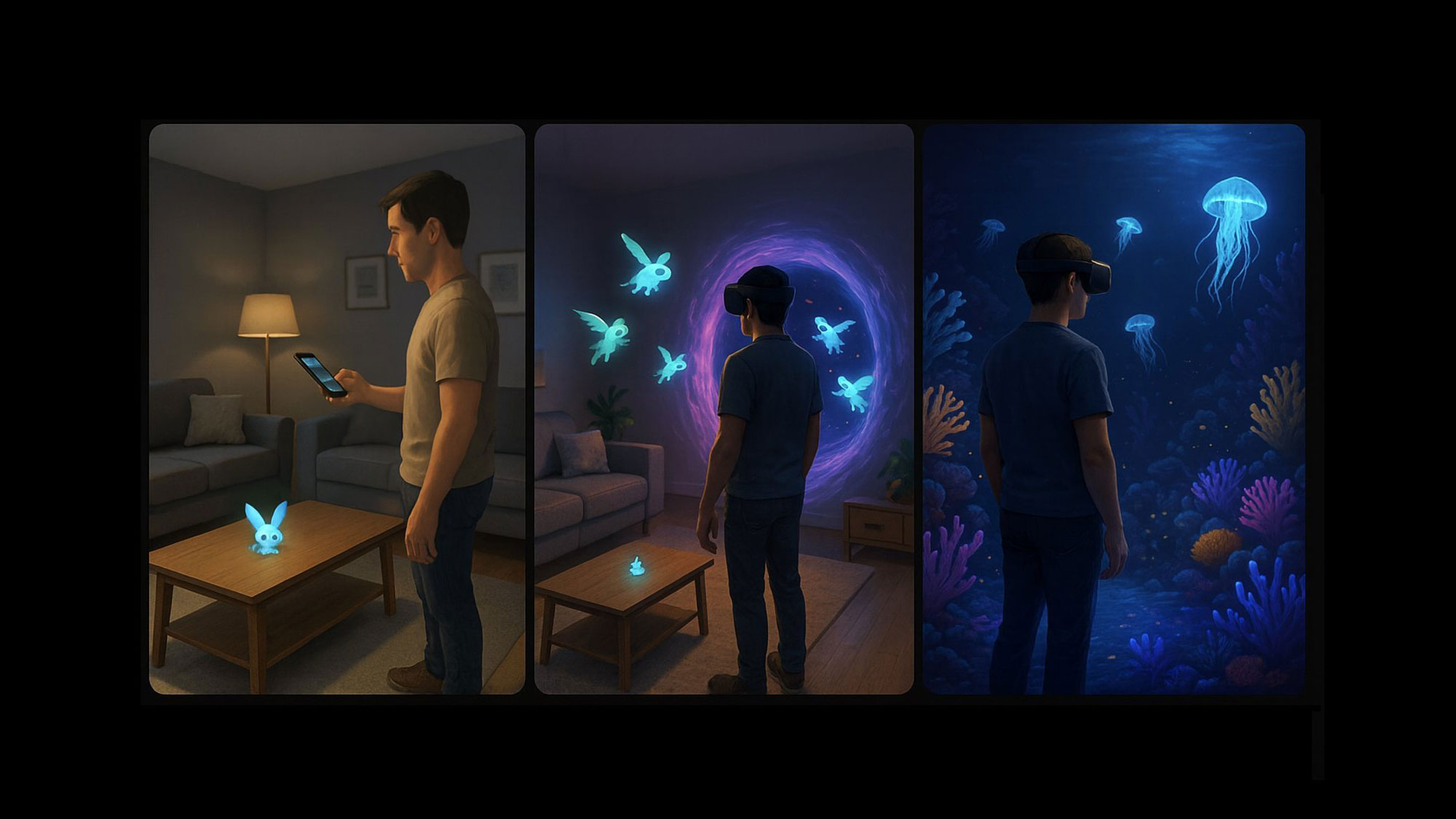
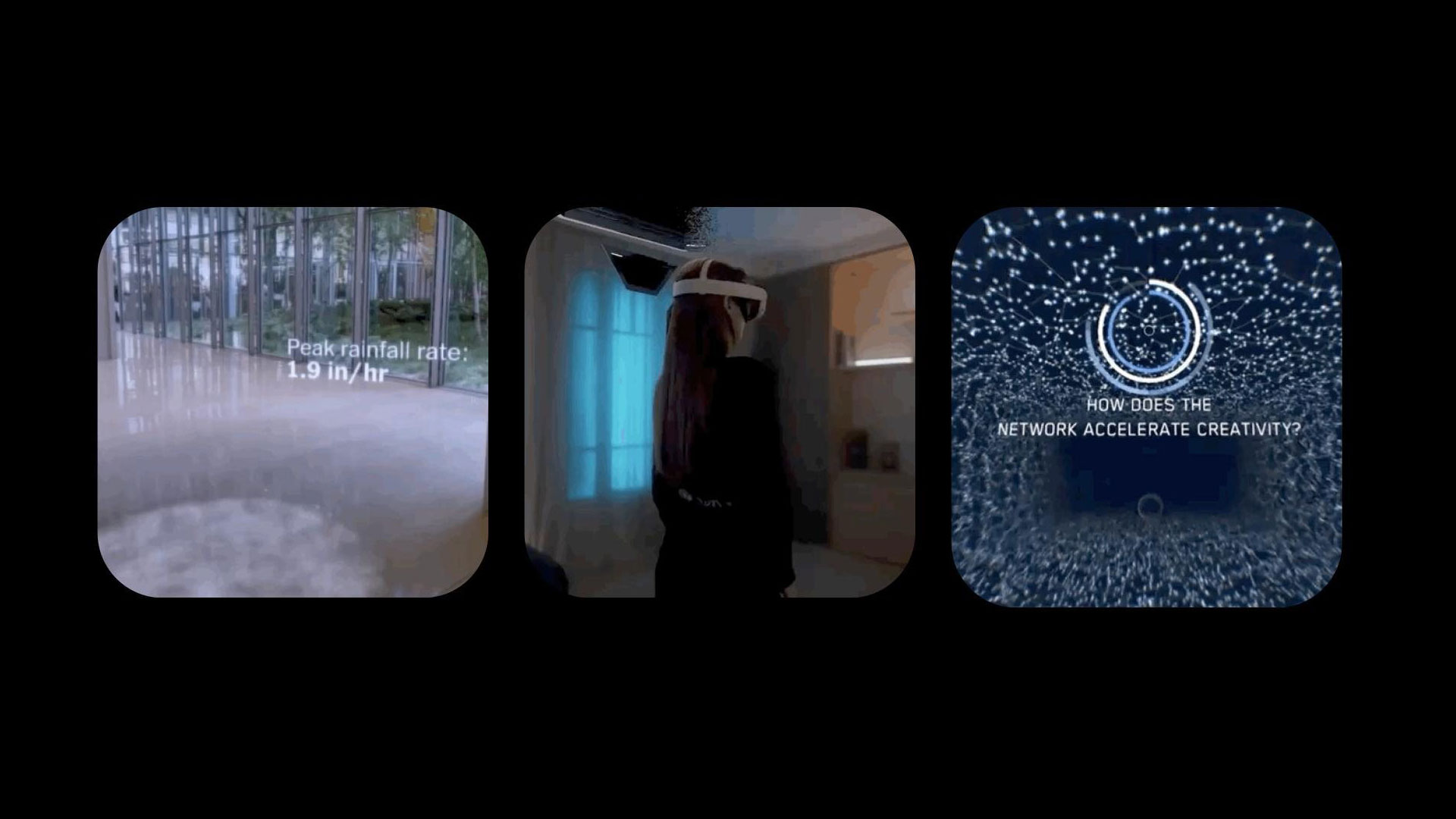
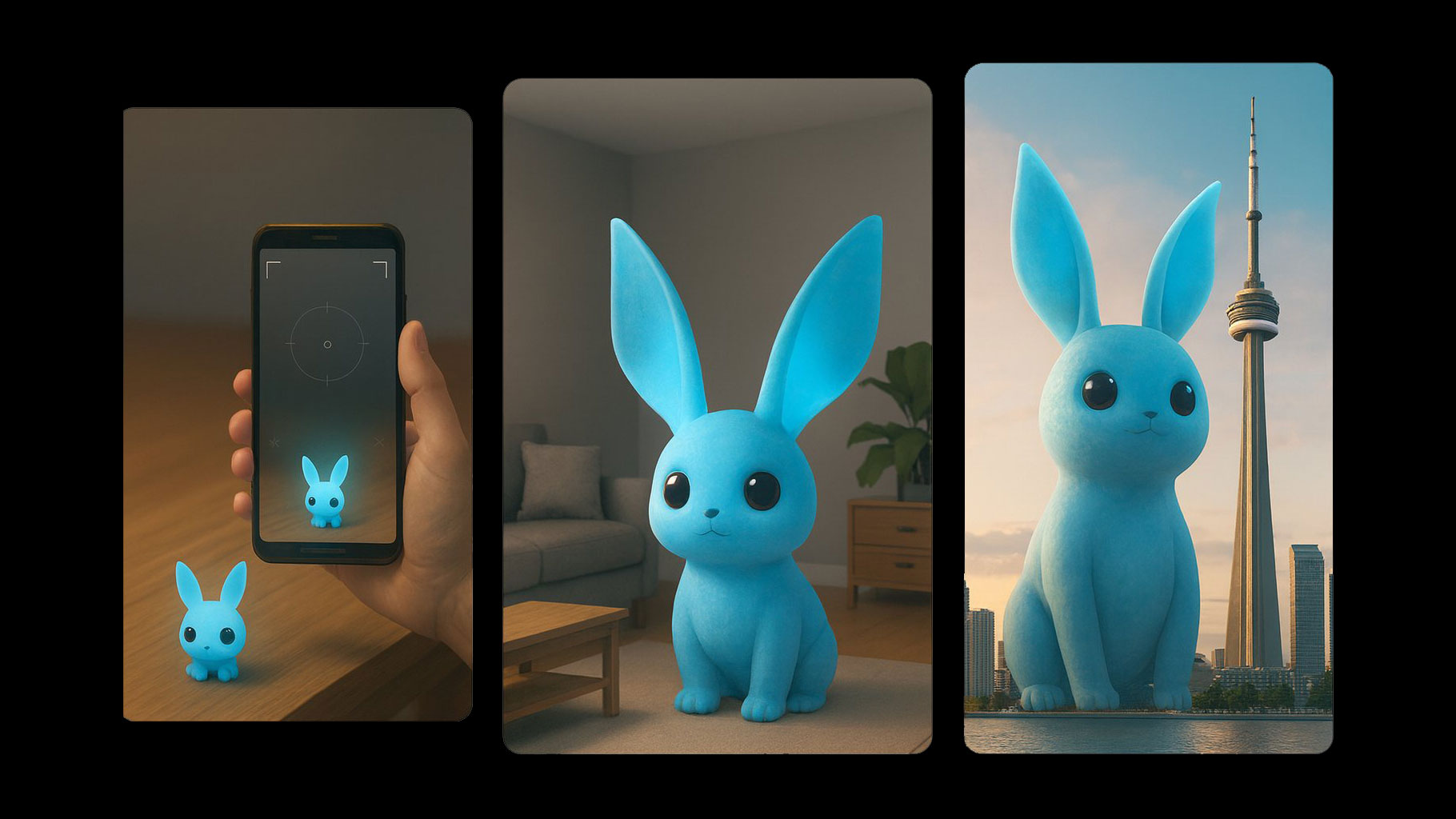
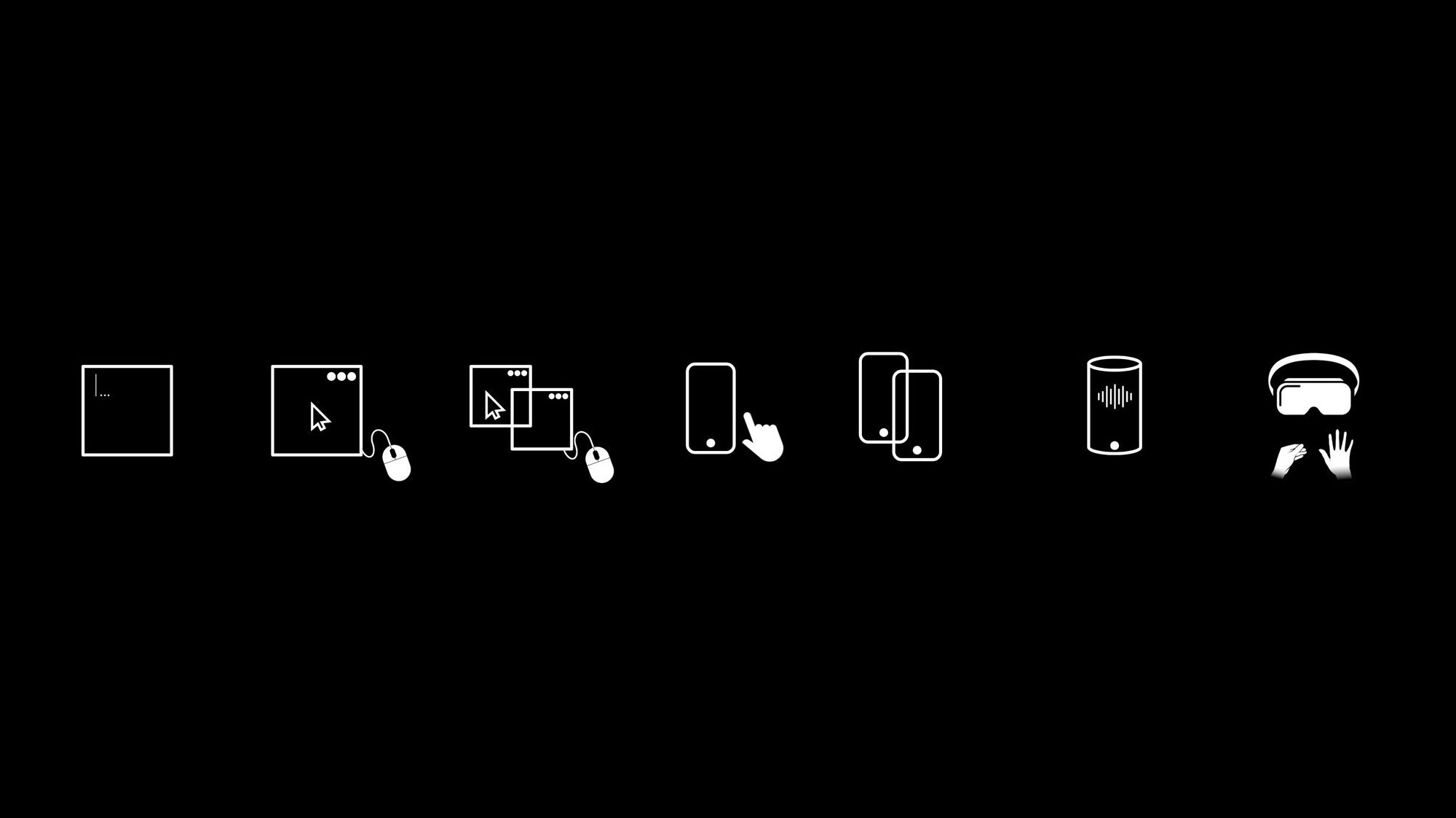
The XR continuum, from augmented to virtual
Our Impact
Participants new to XR gained confidence to create their own immersive experiences.
Each cohort built embodied knowledge of storytelling for an audience inside the scene, along with a shared vocabulary for immersive work, a repeatable process for developing a concept, and a clear way to explain why their story belongs in XR.
The XR Storytelling Toolkit
- 01Narrative
- 02Superpowers
- 03Storyboard
- 04Spatial Blocking
Why We Loved This Project
This project combined two areas of our work that usually appear in separate engagements: somatic practice and strategy for emerging technology.
Immersive media is built around the audience’s body, so we loved teaching creative engagement with emerging technology through an embodied perspective. The participants were experienced storytellers who already knew how to build character, tension, and emotion, and this program gave them a framework to carry that craft into new formats. Special thanks to the Canadian Film Centre and Laura Mingail of Archetypes & Effects for co-hosting.
Ready to move together?
Start with a complimentary intro call. We’ll listen to what you’re navigating, share honestly whether we’re the right fit, and point you toward what makes the most sense.
Book Free Intro Call